
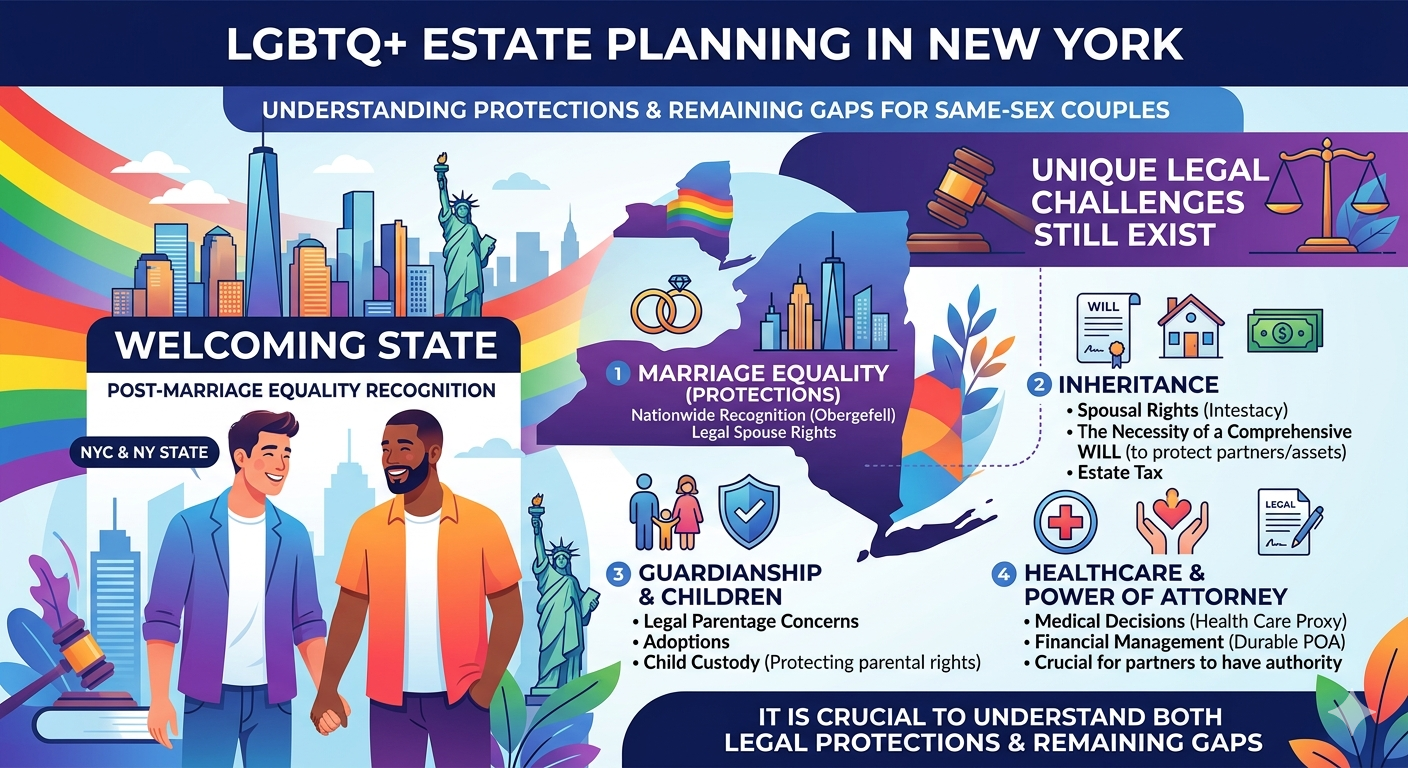
New York has long been regarded as a welcoming state for LGBTQ+ individuals, especially after the nationwide recognition of marriage equality. However, LGBTQ+ couples in New York still face unique legal challenges when it comes to estate planning. It is crucial to understand both the legal protections and the remaining gaps that may impact same-sex couples regarding inheritance, guardianship, and healthcare decisions.
Understanding Spousal Rights in New York
Marriage equality ensures that same-sex spouses have the same legal rights as heterosexual couples in areas like property distribution and inheritance. In New York, if one spouse dies without a will, the surviving spouse typically inherits a substantial portion of the estate. However, gaps can still exist, particularly if a couple is unmarried, not formally registered as domestic partners, or if family members challenge the validity of the marriage.
For LGBTQ+ couples who may have come together before the legalization of same-sex marriage, it is important to reevaluate documents such as previous wills, trusts, and beneficiary designations. Confirming that all documents reflect current state law and the couple’s wishes is essential.
Addressing Inheritance Challenges
Although same-sex married couples now have equal inheritance rights in New York, unmarried partners remain legally vulnerable. Without clear, updated estate planning documents, an unmarried survivor may have no claim to a partner’s assets. Unmarried couples should prioritize the following:
-
Designating each other as beneficiaries on financial accounts and insurance
-
Creating a will or trust to direct specific assets
-
Reviewing and updating titles and deeds to reflect joint ownership
A comprehensive estate plan minimizes the potential for disputes with biological families or other third parties, giving peace of mind in all seasons, especially for those who may be concerned about family acceptance or legal standing.
Guardianship and Parental Rights Concerns
Same-sex couples, particularly those raising children, must carefully consider guardianship arrangements. While New York recognizes both parents if both are listed on a child’s birth certificate or have completed second-parent adoption, legal complications can still arise. An updated will should clearly name guardians for minor children and specify parental wishes to guide the courts. This is especially important for couples who have used assisted reproduction or surrogacy, which is increasingly common in urban areas like New York City.
Healthcare Proxies and Advance Directives
Healthcare decision-making is another critical area where careful estate planning is vital. Without properly executed documents, a partner, especially a non-married one may not have the legal authority to make medical or end-of-life decisions. In New York, every adult should consider these steps:
-
Create a healthcare proxy designating their partner as the primary agent
-
Draft a living will outlining their wishes regarding healthcare and end-of-life care
-
Discuss healthcare directives with all relevant healthcare providers
These precautions are especially important for LGBTQ+ couples, considering potential issues with unaccepting family members or lack of clarity in medical emergencies.
Proactive Legal Support for LGBTQ+ Couples
Many LGBTQ+ couples in New York benefit from working with a firm that understands the unique concerns surrounding estate planning for LGBTQ+ individuals, advance directives, and family law. Ensuring legal protections are in place can reduce the risk of disputes and protect the interests of all parties involved, regardless of changing laws or family circumstances.
Contact Benjamin Katz, Esq. P.C. for Estate Planning Guidance in New York, NY
If you are part of an LGBTQ+ couple in New York, NY and want to safeguard your family’s future, the dedicated team at Benjamin Katz, Esq. P.C. can help. With experience in crafting tailored estate plans, addressing guardianship, and ensuring appropriate healthcare directives, you can secure your wishes for every season ahead. Call (646) 775-3455 or fill out the secure online form to schedule a confidential consultation.